This pearl has become my soul
In John Steinbeck's novella The Pearl, the expression "This pearl has become my soul" marks the moment when Kino's identity becomes irreversibly fused with the great pearl he has found. Uttered to his brother Juan Tomás on the night of their flight from La Paz, the phrase crystallizes the novella's central moral drama: the pearl, which began as a promise of education and freedom for his son Coyotito, has transformed into an object of obsession that consumes Kino's very being, leading him to violence, the destruction of his family, and ultimately the death of his child.
Origin and Context of the Utterance
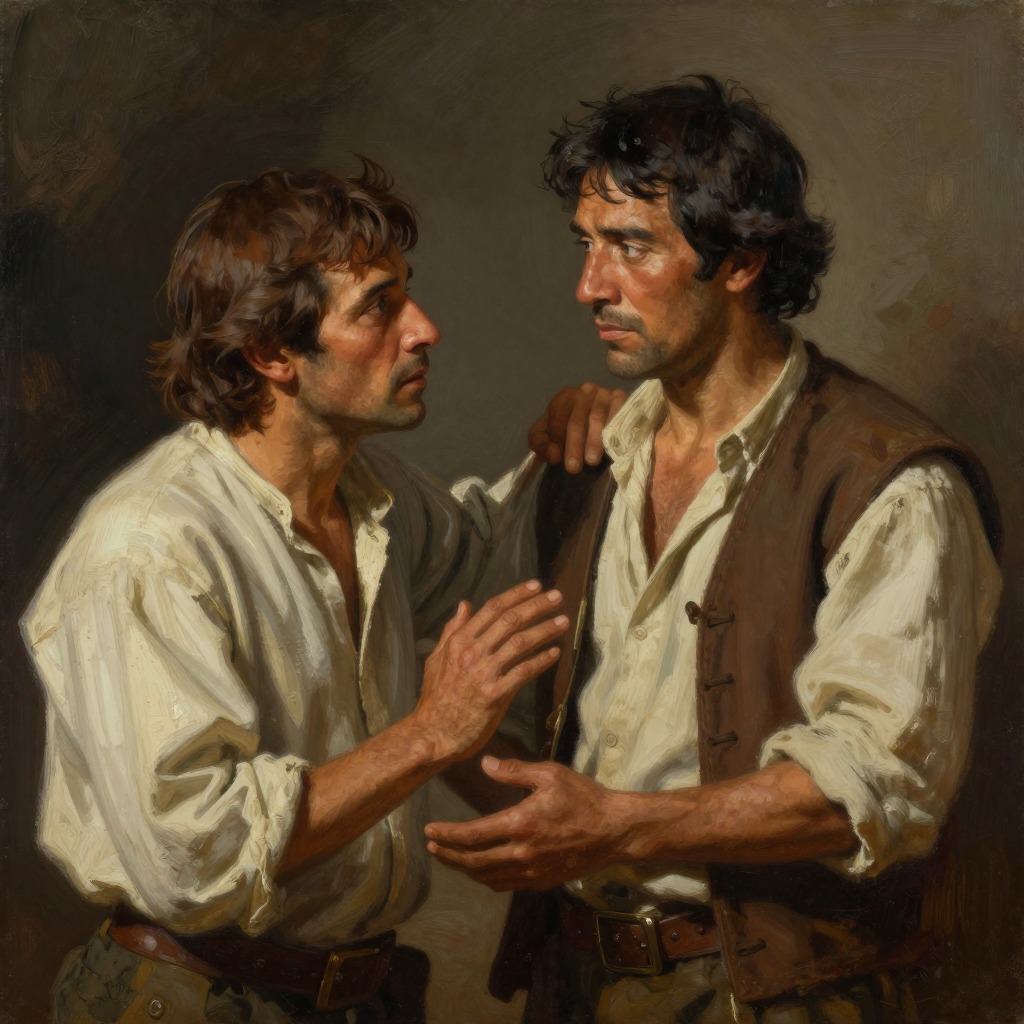
The declaration comes at a critical juncture in the narrative, after Kino has already suffered a series of escalating attacks. His canoe has been destroyed, his house burned, and he has killed a man in self-defense during a nighttime assault. Seeking refuge in the home of his brother Juan Tomás, Kino explains his predicament and his refusal to abandon the pearl. When Juan Tomás asks, "You will not give up the pearl?" Kino responds with the definitive statement: "This pearl has become my soul. If I give it up I shall lose my soul. Go thou also with God" . The words are spoken as a farewell, and Juan Tomás's embrace is described as "like a death," underscoring the finality and tragic weight of Kino's commitment.
The Pearl as a Substitute for the Soul
The phrase reveals a profound psychological and spiritual transformation. Earlier in the story, Kino's world was organized around the "Song of the Family"—a melody representing safety, warmth, and wholeness. The pearl initially merged with this song, promising to fulfill his dreams: a church marriage, new clothes, a rifle, and most importantly, an education for Coyotito that would break the cycle of poverty and oppression. But as the pearl attracts greed and violence, Kino's attachment to it deepens into something pathological. When Juana, recognizing the evil the pearl has brought, cries, "This thing is evil... It will destroy us," Kino insists, "This is our one chance... Our son must go to school. He must break out of the pot that holds us in" . His refusal to heed her warnings shows that the pearl has already begun to replace his familial bonds as the organizing principle of his life.
Violence and the Hardening of the Self
The identification of the pearl with Kino's soul is accompanied by a progressive hardening of his character. After Juana attempts to throw the pearl back into the sea, Kino strikes her in the face with his clenched fist and kicks her in the side . This act of domestic violence—directed at the woman who embodies the family song—demonstrates how completely the pearl has corrupted his values. Later, as he looks into the pearl to find his vision of the future, he sees only a "huddled dark body on the ground with shining blood dripping from its throat" and Juana's "beaten face crawling home through the night" . The pearl no longer shows him dreams but nightmares, yet he cannot relinquish it. The music of the pearl has become "sinister" and "interwoven with the music of evil" .
The Final Confrontation and the Loss of the Soul
The climax of Kino's identification with the pearl occurs during the final confrontation with the trackers. As he descends the mountain to attack them, the "Song of the Family" has transformed into something "fierce and sharp and feline as the snarl of a female puma" . The family song, once a source of comfort, now drives him toward killing. After he kills the three trackers, he hears the cry of death from the cave where Juana and Coyotito are hidden: Coyotito has been shot by the trackers' rifle. The pearl, which Kino had declared his soul, has cost him his son's life.
The Rejection and Return
In the aftermath, Kino and Juana return to La Paz carrying Coyotito's body. At the shore, Kino holds the pearl and sees in its surface "Coyotito lying in the little cave with the top of his head shot away" . The pearl is now "ugly... gray, like a malignant growth." He offers it to Juana, but she refuses, saying simply, "No, you" . Kino then flings the pearl back into the sea with all his might. The act of throwing away the pearl is the only way he can begin to reclaim his soul, but the cost—the death of his child—is irreversible. The pearl settles to the ocean floor, and "the music of the pearl drifted to a whisper and disappeared" .
Thematic Significance
The expression "This pearl has become my soul" functions as the moral fulcrum of Steinbeck's parable. It illustrates how material desire can consume a person's identity, turning a dream of liberation into a nightmare of destruction. Kino's journey from a loving husband and father to a man willing to strike his wife and kill strangers in defense of a jewel mirrors the biblical warning about the "pearl of great price"—but in Steinbeck's inversion, the pearl becomes not a metaphor for heaven but for the corrupting power of wealth. The phrase also resonates with the novella's exploration of colonialism and oppression: Kino's people have been cheated and subjugated for four hundred years, and the pearl represents his desperate attempt to break free. Yet in making the pearl his soul, he loses everything that gave his life meaning. The final image of Kino and Juana walking side by side, stripped of their dreams and their child, suggests that the only redemption possible is the painful recognition that some things are more valuable than any treasure.